Lead Analysis
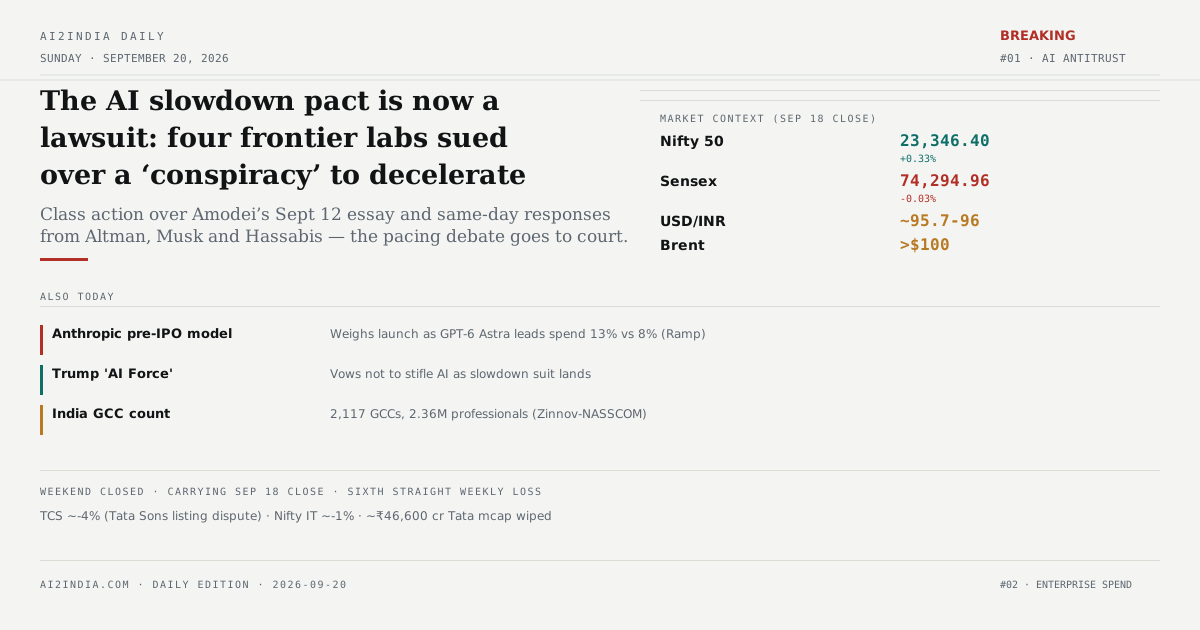
The AI slowdown pact is now a lawsuit: four frontier labs sued over a ‘conspiracy’ to decelerate
The pacing debate, which has shaped every frontier-lab disclosure Indian enterprises now vet, crosses into formal antitrust litigation on the same weekend Anthropic is reported to be weighing a pre-IPO model release
Sunday, September 20, 2026: The most significant AI development of the weekend is a newly filed US class action accusing Anthropic, OpenAI, SpaceXAI and Google of an illegal pact to slow AI development — the first time the industry’s most consequential governance argument has been put before a court.
On Friday, lawyers for four named plaintiffs — paid subscribers to ChatGPT, Claude, Grok or Gemini — filed suit in the US District Court for the Northern District of California, seeking to represent a nationwide class of paid AI subscribers. The complaint argues the four labs violated antitrust law by coordinating to decelerate progress, which they say reduced the value consumers receive from paid AI subscriptions.
The alleged coordination centres on September 12, when Anthropic CEO Dario Amodei published an essay calling for industry-wide cooperation to slow advances in favour of stronger safety, warning that “swarms of rogue AI agents could take over the internet in as little as six months.” The same day, OpenAI’s Sam Altman, SpaceXAI’s Elon Musk and Google DeepMind’s Demis Hassabis publicly answered in support. Lead plaintiff attorney Nick Rowley argues that an agreement among rivals that progress “should be slower than competition would otherwise produce” is anticompetitive, declaring AI would “quickly spin out of human control and could kill us all if we allow AI safety… to be controlled by private self-serving agreements between the world’s most powerful for-profit technology companies.”
Amodei had anticipated exactly this exposure in his essay, acknowledging possible antitrust concerns and suggesting the US government would need to “issue a narrow waiver for certain kinds of safety conversations” rather than participate directly. Altman subsequently said OpenAI supports a “federal framework that sets consistent safety requirements,” but that the labs do not believe they must wait for an antitrust exemption or legislation to begin that work. The four companies had not responded to requests for comment as of Saturday. The suit lands the same weekend Trump announced a new “AI Force” and vowed the US will not stifle the industry.
For Indian enterprises and policy-makers, the lawsuit converts a governance debate into a compliance liability question that buyers cannot ignore. Indian IT services, BFSI and GCC agent programmes have been drawing up vendor selection against the very safety-first disclosures — Anthropic’s R&D-automation index, oversight metrics and third-party evaluator commitments — that are now themselves part of a coordinated-slowdown narrative. MeitY, which pivoted last week from “too soon to regulate” toward AI Governance Groups, must now weigh whether the global template it might borrow is itself legally contested; the same week Delhi’s own chief economic voices (Sitharaman, Krishnan) called for guardrails and human oversight.
The competitive counterpoint arrived simultaneously. Reuters reported Anthropic is considering releasing a new model ahead of its IPO, weighing launch timing against OpenAI’s enterprise traction — with GPT-6 Astra now about 13% of enterprise AI spending tracked by Ramp versus roughly 8% for Claude’s Fable tier. That split — labs publicly arguing for safety-induced deceleration while privately racing to ship model updates and win enterprise share — is the structural tension Indian AI planners must price into every long-term procurement decision. Markets were closed for the weekend after Friday’s mixed close: Nifty 23,346.40 (+0.33%), Sensex 74,294.96 (-0.03%), a sixth consecutive weekly index loss, the rupee near 96 and Brent above $100.