Lead Analysis
OpenAI begins rolling out GPT-6 Astra (Sept 4)
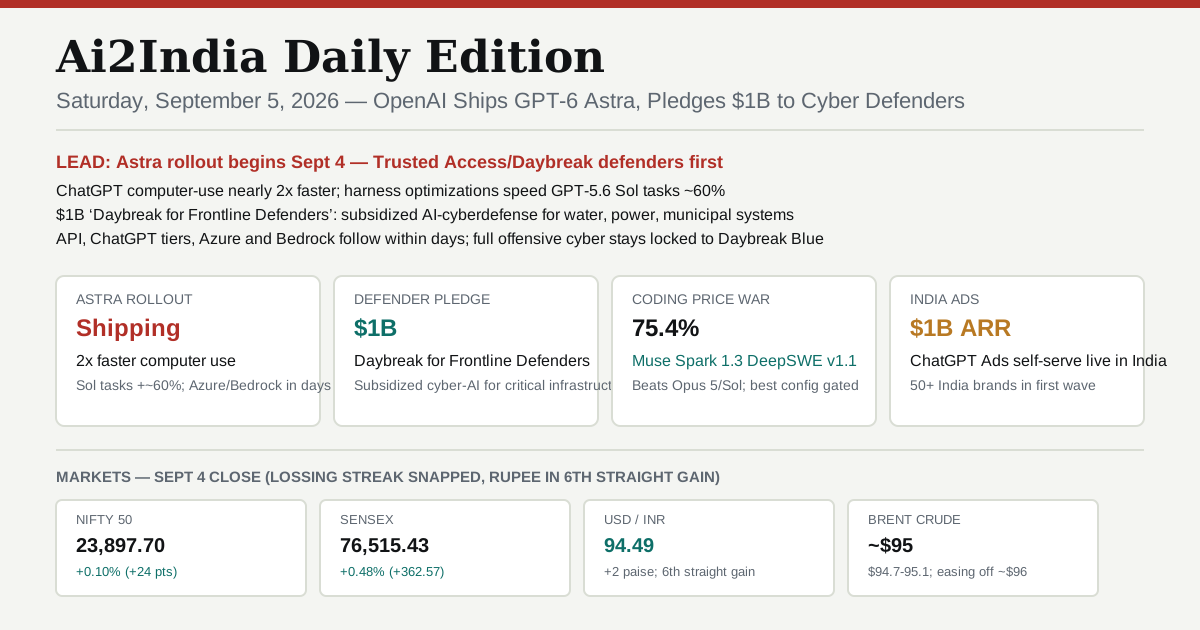
Trusted Access/Daybreak cyber-defender customers first, with ChatGPT getting a harness upgrade that makes computer use nearly 2x faster and speeds even GPT-5.6 Sol tasks by ~60% — then pledges $1 billion in subsidized access to AI-cyberdefense tools, training and support for critical infrastructure under ‘Daybreak for Frontline Defenders’; the same week ChatGPT Ads crossed a $1B annualized run rate in ~200 days and opened self-serve ad buying to India, Europe, the Middle East and North Africa; Meta’s Muse Spark 1.3 edges Opus 5 and Sol on coding (DeepSWE 75.4%) with its best configuration gated; Sensex 76,515.43 (+0.48%), Nifty 23,897.70 (+0.10%), INR 94.49, Brent ~$95
Saturday, September 5, 2026: The day’s most significant AI development is the start of the GPT-6 Astra rollout on Thursday Sept 4 — the moment the most consequential model release of 2026 begins actually reaching customers.
OpenAI said Thursday it would start shipping Astra to select customers (companies in the Trusted Access Program and Daybreak access organizations), with API, ChatGPT Plus/Pro/Business/Enterprise, AWS Bedrock and Microsoft Azure to follow “within a few days” (DAWN; note.com AIworker; 9to5Mac, Sept 4).
The rollout carries a meaningful upgrade beyond the model itself: OpenAI researchers shipped an optimized computer-use harness that makes ChatGPT nearly 2x faster at computer-use tasks with Astra — and the same optimizations accelerate existing models, speeding up GPT-5.6 Sol tasks by roughly 60% (Ari Weinstein tweet via 9to5Mac, Sept 4).
For Indian enterprises piloting agentic pipelines, this means the largest single productivity step of the year lands without a model swap: existing Sol deployments get faster this week, and Astra compounds it.
The second thread is OpenAI’s defensive turn: the same day, OpenAI announced Daybreak for Frontline Defenders, a $1 billion commitment to subsidized access to its AI cybersecurity tools, training and technical support for organizations protecting critical services — water systems, electricity providers, local governments (The Hacker News; Insurance Journal; Crowdfund Insider, Sept 4).
India’s critical-infrastructure operators, state utilities and MSSPs are structurally inside the target set, and the subsidized-access frame matters for Indian buyers who have been priced out of premium cyber-AI (Astra’s full offensive capability remains locked to Daybreak Blue).
Third, OpenAI monetization went live in India this week: ChatGPT Ads crossed a $1 billion annualized revenue run rate in roughly 200 days, and self-serve ad buying opened to Indian advertisers alongside Europe, the Middle East and North Africa (OpenAI; ET; ANI; Forbes, Aug 31-Sept 1) — over 50 brands had already gone live in India’s first wave via WPP/Omnicom managed access. That makes OpenAI a direct competitor for Indian digital-ad budgets for the first time, and an Indian enterprise-facing vendor with a measurable ad-ARPU story.
The competitive counter-current: Meta’s Muse Spark 1.3 (shipped Sept 2-3) posts a 75.4% DeepSWE v1.1 score that edges Claude Opus 5 and GPT-5.6 Sol, a 61 Artificial Analysis Intelligence Index (+4 vs 1.2), and near-perfect million-token retrieval — but VentureBeat flags its best results come from a configuration developers cannot broadly use yet (VentureBeat; DataCamp; Sept 3-4).
New York Times reporting (Sept 4) captured the strategic consequence: Corporate America is getting hooked on open-source AI, and the “good enough” threat is now visible to Anthropic and OpenAI alike.
Anthropic, meanwhile, won its court fight with the Pentagon (Judge Rita Lin struck down the DoD supply-chain blacklist as “arbitrary and capricious,” Aug 28) and was verbally rehabilitated by Commerce Secretary Lutnick — “They’ve done what we asked. They’re back on the right side” (Axios, Sept 2) — clearing the way for federal procurement to resume.
Markets provided context, not leadership: Sensex rose 362.57 points to 76,515.43 (+0.48%) and Nifty 24 points to 23,897.70 (+0.10%), snapping a four-day losing streak as global equities firmed and US Treasury yields eased, led by metals, private banks and oil & gas, with RIL and HDFC Life up ~2% each (TOI; Moneycontrol; Business Standard; News18; Sept 4).
The rupee gained a sixth straight session, closing at 94.49 (+2 paise) on RBI-scheme inflows and FPI optimism (The Hindu BusinessLine, Sept 4), and Brent eased to ~$94.7-95.1 after topping ~$96 intraday a day earlier (Forbes; 5paisa; Sept 4).