Lead Analysis
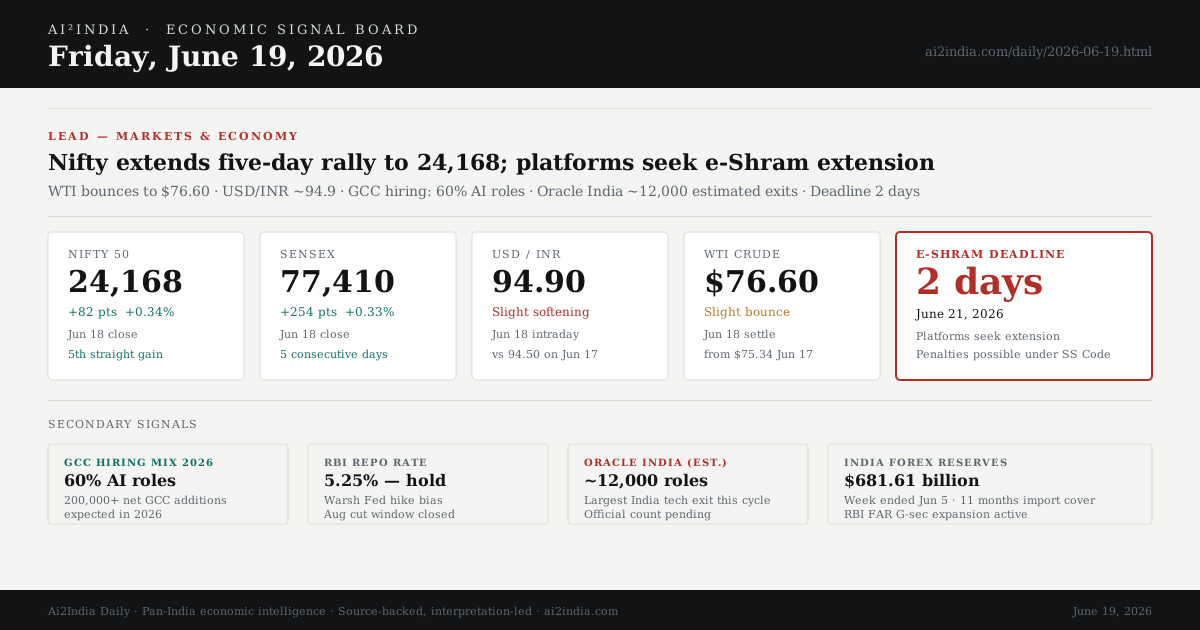
Indian markets extend their fifth consecutive rally to Nifty 24,168 as gig platform giants formally seek an e-Shram deadline extension with just two days left; WTI crude bounces mildly to $76.60 and GCC hiring data shows 60% of new 2026 roles are tied to AI and specialist skills.
Friday, June 19 opens with Indian equity markets completing a remarkable five-session run: the Nifty 50 closed Thursday at 24,168.00 (+82.30, +0.34%) and the Sensex at 77,409.98 (+254.36, +0.33%), their fifth consecutive session of gains — a streak that has taken the Nifty from below 23,900 on June 13 to comfortably above 24,100 by end of Thursday. The broader market mood remains constructive despite the Warsh Federal Reserve’s hike bias: Indian investors are anchoring on domestic tailwinds — crude relief, the RBI’s capital-account measures, and a GCC investment narrative that keeps producing new data points. WTI crude bounced modestly to $76.60/bbl on Thursday (Brent ~$77.91), pulling back from the June 17 low of $75.34 but still roughly $3–4 below last week’s levels. The rupee eased slightly to ~94.9 on Thursday intraday from the June 17 close of 94.50, reflecting mild post-FOMC dollar firmness; it remains well off its April–May lows. On the gig-economy front, the most significant development of June 18–19 is that major digital platform aggregators have formally approached the government seeking an extension to the June 21 e-Shram gig-worker registration deadline, citing operational and API integration challenges (Business Standard, June 18). This is a material shift from Amazon India’s public compliance confirmation a day earlier: it means not all platforms are ready, and the government must now decide whether to hold the line or grant a brief technical extension. With just 48 hours to the deadline, the enforcement posture of the Ministry of Labour over the weekend will define the regulatory credibility of India’s gig-worker formalisation agenda. Separately, new June 2026 data from multiple hiring and GCC analysts confirm that India’s GCC sector is now allocating 60% of new open roles to AI, data, and platform engineering skills — a structural hiring shift that runs parallel to the broad contraction in legacy IT services headcount. For job-market readers, the divergence is now quantified: GCC tech roles are growing and AI-weighted; traditional IT services roles are shrinking.