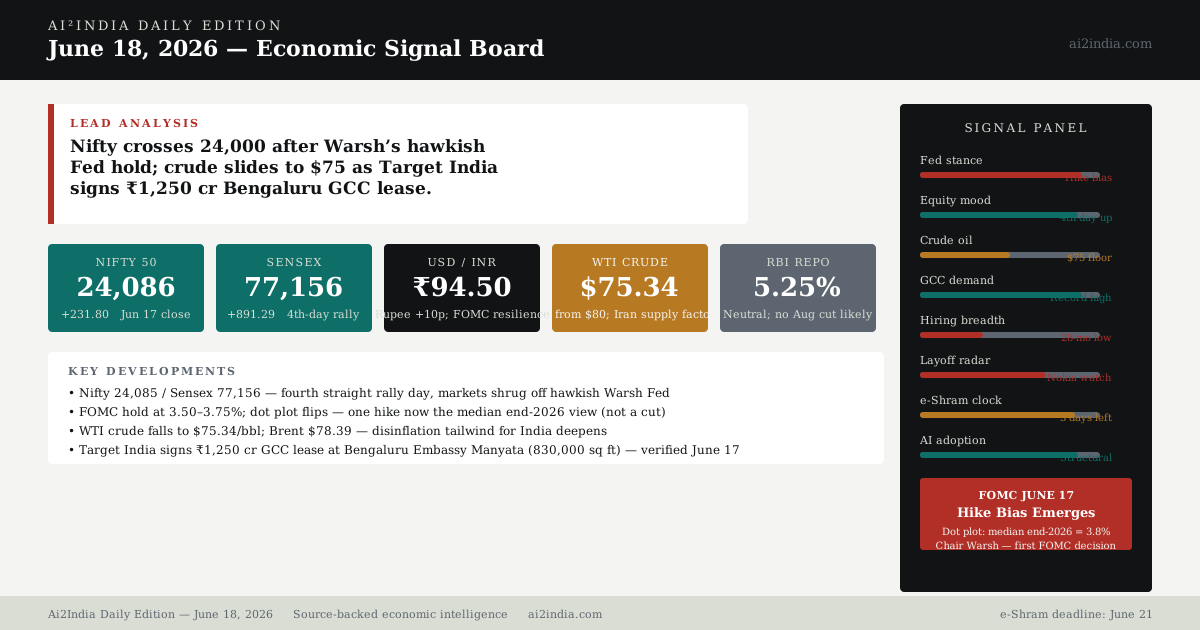
Lead Analysis
Nifty crosses 24,000 as Indian markets decouple from the Warsh Fed’s surprise hike bias; WTI crude drops to $75 and Target India signs a ₹1,250 crore GCC lease at Bengaluru.
Thursday, June 18 opens with the FOMC decision fully in the market and two new India-specific moves sharpening the picture. The June 17 FOMC — the first under new Federal Reserve Chair Kevin Warsh — confirmed a unanimous hold at 3.50–3.75%, but the dot plot delivered a pivotal shift: the median end-2026 projection moved up to approximately 3.8%, placing a hike rather than a cut as the committee’s baseline. In most emerging-market episodes, a Fed hike bias of this kind would unsettle the rupee and weigh on Indian equities. Instead, India’s market did the opposite: the Nifty 50 closed Wednesday at 24,085.70 (+96.55 points), crossing 24,000 for the first time in several weeks, and the Sensex gained 347 points to 77,155.62 — a fourth consecutive day of gains. The rupee hit a six-week high intraday on crude’s slide before settling at 94.50; it trades near 94.7 in early Thursday morning on post-FOMC dollar. WTI fell to approximately $75.34 per barrel and Brent to $78.39, as the US–Iran peace deal’s supply effect overrides the dollar’s post-FOMC firmness. For India, $75 crude versus last week’s $80 saves approximately $250 million per day on the import bill. On the structural side, Target India signed an 830,000 square-foot GCC lease at Embassy Manyata, Bengaluru — ₹1,250 crore over 10 years — confirming decade-scale corporate investment even as IT-services headcount contracts. The RBI added a capital account lever on June 17: it temporarily removed the interest rate cap on fresh FCNR(B) 3–5 year deposits and NRE 3-year-plus deposits through September 30, giving banks flexibility to price NRI deposits higher and attract foreign inflows — a rupee-supportive move that complements the crude-driven current account improvement. On the e-Shram gig-worker front, Amazon India became the first major platform to publicly confirm compliance readiness ahead of the June 21 deadline, while quick-commerce players are still working through implementation details with policymakers. Gig worker union IFAT is calling for strict enforcement and pressing for clarity on the concrete social security benefits that will flow from registration.