Lead Analysis
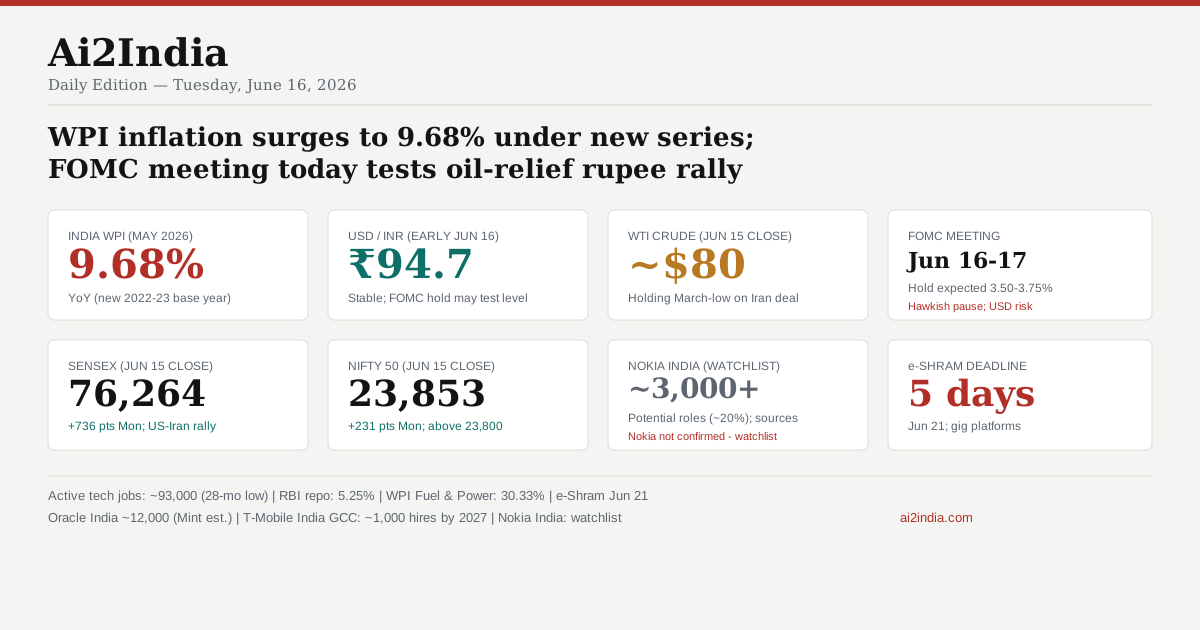
India WPI inflation jumps to 9.68% under the new base-year series, complicating the easing narrative as FOMC meets today with a hawkish hold expected.
Tuesday, June 16 opens with two headline macro events pulling in opposite directions. The first: India's May 2026 WPI inflation rate came in at 9.68% year-on-year in data released June 15 — the first print under the government's new 2022–23 base year series (which replaces the decade-old 2011–12 series). The jump is large in headline terms, but the new series inflates Fuel & Power weights and incorporates global commodity cycles differently; Fuel & Power inflation alone ran at 30.33% YoY in May, reflecting the base effects of last year's crude moves now rolling into the new series. Food WPI came in more moderately at 4.49% and Manufactured Products at 7.48%. The second event: the US Federal Reserve's FOMC meeting began today (June 16–17) and markets are pricing a hawkish hold at 3.50–3.75% with near-certainty — meaning no rate cut, but the accompanying dot plot and press conference are what matter for Indian equities and the rupee. A hawkish tone from Powell is the primary downside risk to the INR's recent gains: the rupee moved from ~95.18 to ~94.26–94.5 on Monday's US-Iran deal. Early June 16 readings put USD/INR at ~94.6–94.7, suggesting the market is already giving back a sliver of Monday's move ahead of the Fed. The Sensex enters Tuesday at 76,264.33 and Nifty 50 at 23,853.90 — Monday's closing levels — with FOMC as the session's swing factor. On the labour-market side, Nokia India's restructuring picture sharpened further: sources cited by SightsInPlus and Moneycontrol indicate the global ~20% workforce reduction (9,000–14,000 roles) would imply ~3,000+ India-based roles from Nokia's ~17,000-person India headcount — but Nokia has not officially disclosed any India-specific number and these remain watchlist-only. The e-Shram gig-worker registration deadline for platform operators is now 5 days away. WTI crude holds in the ~$80 range, sustaining the oil-price relief from Monday, but a stronger post-FOMC dollar could partially offset the benefits if it feeds through to imported inflation.