Lead Analysis
US midterms deliver overwhelming opposition to AI data centers
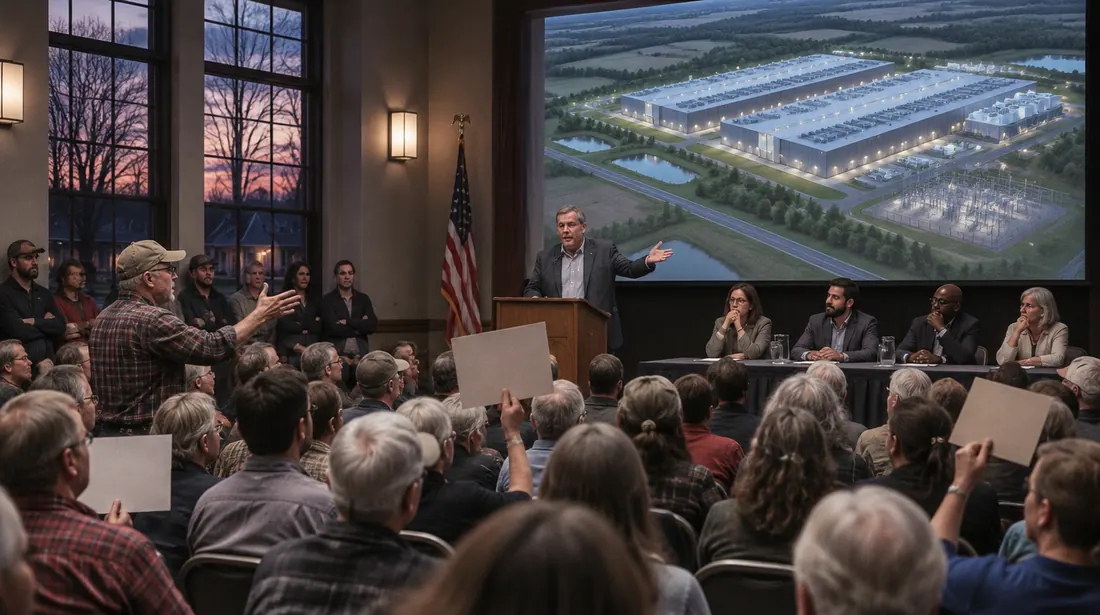
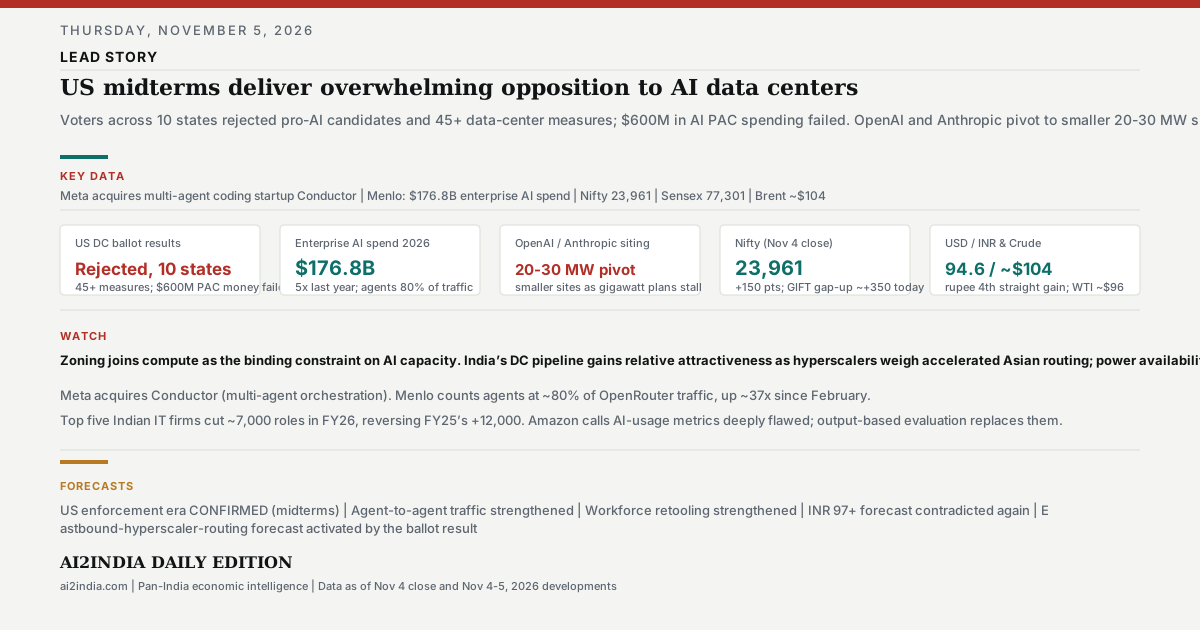
Thursday, November 5, 2026: American voters across 10 states overwhelmingly rejected pro-AI candidates and data center construction measures in Tuesday’s midterm election, delivering a political setback for the trillion-dollar AI infrastructure buildout even as Democrats retained Congress.
At least 45 data center-related measures faced ballots; voters rejected them broadly. The tech industry’s $600 million PAC campaign lost. Now OpenAI and Anthropic are reportedly scrambling for smaller 20-to-30 megawatt facilities as gigawatt-scale hyperscale sites face mounting delays.
The scale of voter pushback exceeded most industry forecasts. Across 10 states, at least 41 ballot measures related to data centers went to vote -- and voters rejected them in numbers that surprised even the opponents of development. The Associated Press reported that both Democrats and Republicans expressed discomfort with new data centers in their communities, citing energy concerns, noise, pollution, and land use.
Politico noted that AI-focused super PACs poured over $600 million into the midterms trying to shape outcomes, but the money could not overcome organized grassroots opposition in key swing districts. Several pro-AI candidates lost races they had heavily funded. The result represents one of the first major electoral tests of whether the AI capital supercycle has created sufficient public goodwill to sustain itself.
The market interpretation matters for India. The Indian data center and REIT proxy universe has priced in continued US and global DC expansion. If US siting becomes harder, hyperscalers may accelerate Asian routing -- particularly India, where regulatory clarity exists through the IndiaAI mission and MEITY frameworks, and where power costs remain competitive. The flip side is that Indian REIT proxies may see renewed enthusiasm if capital reallocates eastward.
OpenAI and Anthropic are said to be pursuing smaller, more quickly deployable 20-30 MW configurations rather than waiting for gigawatt-scale permits -- a tactical shift that could reshape the procurement timeline for Indian system integrators who supply site preparation, civil works, and MEP services to foreign DC operators. Quotaholders in Indian DC parks (Sembcorp, Adani, Embassy) should note the potential reallocation signal.
Democrats retained control of Congress, which means the federal regulatory landscape for AI will likely see more legislative attention rather than less. The FEC report on AI PAC spending (expected within weeks) may become the baseline for future disclosure requirements on technology-industry political expenditures. For Indian enterprises, this reinforces the case for proactive regulatory engagement rather than reactive compliance.